Last Updated: September 2026
Ohio's legal BAC limit is 0.08% for drivers 21 and older, 0.02% for drivers under 21, and 0.04% for commercial drivers. A BAC of 0.17% or higher triggers Ohio's "Super OVI" — an enhanced charge with mandatory jail time, higher fines, and an ignition interlock requirement. The same 0.08% threshold applies to boats and other watercraft under Ohio's Boating Under the Influence (BUI) law.
Here's how those limits break down by driver type:
| Driver Category | BAC Limit | Charge |
|---|---|---|
| Adult drivers (21+) | 0.08% | OVI |
| "Super OVI" (any age) | 0.17%+ | Enhanced OVI — mandatory jail, higher fines, interlock |
| Underage drivers (under 21) | 0.02% | OVUAC (Operating a Vehicle after Underage Consumption) |
| Commercial drivers (CDL) | 0.04% | OVI — commercial license consequences |
| Boat/watercraft operators | 0.08% | BUI (ORC 1547.11) |
Below, we break down what each limit means in practice, what happens once you're over it, and what changed under Ohio's 2025 OVI law update.
Ohio's BAC Limits by Driver Type
Standard Adult Drivers (21 and Over)
For most drivers, Ohio's legal limit is a blood alcohol concentration (BAC) of 0.08%. At or above that number, you can be charged with OVI (Operating a Vehicle Impaired) — Ohio's name for what most states call DUI — under Ohio Revised Code 4511.19. This is a "per se" limit, meaning the state doesn't need to prove your driving was impaired — the number on the test alone is enough to support the charge.
New penalties as of April 2025: Under Liv's Law, fines for a first OVI offense now start at $565 (up from $375), and courts may require an ignition interlock device for some first-time offenders in addition to all repeat offenders.
The "Super OVI" — BAC of 0.17% or Higher
Ohio treats a high BAC as its own, more serious offense. Anyone who tests at 0.17% or above — roughly double the standard limit — faces a "Super OVI." This carries:
- A longer mandatory minimum jail sentence than a standard first-offense OVI
- Higher mandatory fines
- A mandatory ignition interlock device, even for a first offense
Underage Drivers (Under 21)
Ohio applies a near-zero-tolerance standard to drivers under 21. A BAC of 0.02% or higher — the equivalent of a single drink for most people — is enough to support a charge called Operating a Vehicle after Underage Consumption (OVUAC).
- First offense: License suspension of 90 days to two years, fines, and mandatory alcohol education, even without any sign of impaired driving.
- At or above 0.08%: An underage driver is charged as an adult OVI, facing the same jail exposure and suspension periods as someone 21 or older.
- Long-term impact: A conviction as a minor can follow a young driver into college admissions decisions, job applications, and insurance underwriting for years afterward.
Commercial Drivers (CDL Holders)
Anyone operating a commercial vehicle is held to a stricter standard: 0.04% BAC or higher while behind the wheel of a commercial vehicle is enough for an OVI charge. Because a CDL is often someone's livelihood, a conviction risks not just standard OVI penalties but the loss — or long-term suspension — of commercial driving privileges specifically, which can end a driving career even where the underlying penalty would otherwise be minor.
How Many Drinks Is That, Really?
BAC depends on body weight, sex, how much you've eaten, and how quickly you drink — there's no single number that applies to everyone. As a rough reference point, one standard drink (a 12 oz beer, a 5 oz glass of wine, or a 1.5 oz shot of liquor) raises BAC by roughly 0.02–0.04% in an average-sized adult, and the body eliminates only about 0.015% per hour. That means two drinks can put a smaller adult near the 0.08% line, and a single drink can put someone under 21 over Ohio's 0.02% underage limit. The only way to know your actual BAC at a given moment is a chemical test — there's no reliable way to "feel" your way to a safe number.
Testing, Refusal, and Implied Consent
By driving in Ohio, you've already agreed to submit to chemical testing if you're arrested for OVI — this is called implied consent. That test can be breath, blood, or urine, and as of the 2025 law update, officers may also use oral fluid (saliva) testing to detect drugs.
- Refusing a test triggers an automatic license suspension of its own, separate from any suspension tied to a conviction, and the refusal itself can be used as evidence against you in court.
- Administrative License Suspension (ALS) rules — the suspension that kicks in immediately after arrest, before your case is even resolved — were refined under the 2025 update and now vary more precisely by scenario (first offense, repeat offense, refusal, or high-test result).
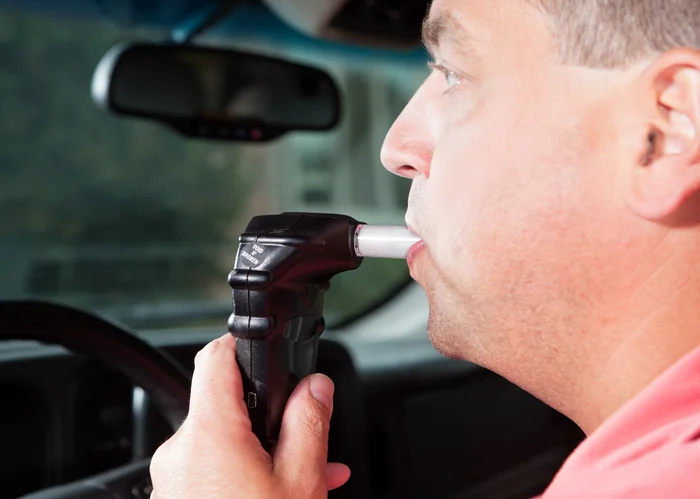
- Breathalyzer reliability is not automatic. Ohio's DMT breathalyzer machines require strict calibration and maintenance protocols. Whether those protocols were actually followed in your case is one of the first things an experienced OVI attorney will investigate.
Boating Under the Influence (BUI): The Same Limit, a Different Law
Ohio's 0.08% threshold doesn't stop at the water's edge. Operating any vessel — including personal watercraft, and in some interpretations even kayaks or canoes — while impaired is prohibited under ORC 1547.11, and officers can stop boats for routine safety checks without needing prior suspicion of impairment.
A few things make BUI different from a standard OVI:
- No automatic license suspension. A BUI conviction doesn't suspend your driver's license, though it can affect your boating privileges and lead to registration or vessel impoundment.
- Jail exposure starts immediately. A first offense carries a mandatory minimum of three days in jail (which can sometimes be satisfied with a certified intervention program instead), up to six months, and fines from $150 to $1,000.
- Repeat offenses escalate quickly. A third offense allows for up to a full year in jail.
- Federal exposure on top of state charges. The Coast Guard can separately impose civil fines of up to $5,000 for federal violations, particularly on federally regulated waters like Lake Erie.
What Ohio's 2025 OVI Law Changes Mean for You
Ohio's OVI laws became noticeably tougher on April 9, 2025. The main changes:
- Higher first-offense fines — up from a $375 minimum to $565.
- Broader ignition interlock requirements — now mandatory for more first-time offenders, not just repeat offenders.
- Steeper repeat-offense penalties — including license suspensions of up to 10 years for a third OVI.
- New oral fluid testing — giving officers another tool to test for drug impairment, with refusal penalties that mirror breath and blood test refusals.
What to Do If You're Pulled Over — or Already Over the Limit
If you're stopped and suspect you may be over the limit:
- Stay polite and cooperative — don't argue with the officer or volunteer admissions of guilt at the roadside.
- Know what you don't have to answer — you aren't required to tell an officer where you were drinking or how much.
- Call a lawyer immediately — the earlier an attorney is involved, the more can be done before your case is even filed, especially with a Super OVI or a refusal on the table.
How Patituce & Associates Can Help
An OVI or BUI charge in Ohio moves fast — arrest, testing, and an administrative license suspension can all happen within hours, long before your case reaches a courtroom. Patituce & Associates reviews every stage of that process, including:
- Testing reliability — whether the breathalyzer or lab followed required calibration and handling protocols
- The stop itself — whether officers had a valid basis to pull you over or test you in the first place
- Refusal and ALS timing — whether the suspension and testing procedures were followed correctly
- Sentencing exposure — pursuing reduced charges, alternative sentencing, or dismissal where the facts support it
For a full breakdown of what a conviction can cost beyond the fine itself, see our guide on how much a DUI costs in Ohio.
Frequently Asked Questions
What is the legal BAC limit in Ohio?
0.08% for drivers 21 and older, 0.02% for drivers under 21, and 0.04% for commercial drivers.
What BAC counts as a "Super OVI" in Ohio?
0.17% or higher, which carries a longer mandatory jail term, higher fines, and a mandatory ignition interlock device.
Can you get an OVI in Ohio under 0.08%?
Yes. Drivers under 21 can be charged at 0.02%, and impairment-based OVI charges can still apply even below 0.08% if an officer establishes impairment through other evidence.
Is the legal alcohol limit the same for boats as for cars in Ohio?
Yes — Ohio's BUI law uses the same 0.08% threshold as its OVI law, though the penalties and license consequences differ.
What happens if I refuse a breath test in Ohio?
Refusal triggers an automatic license suspension on its own, and the refusal can be used as evidence against you in court, separate from anything a chemical test would have shown.
If you or a loved one is facing an OVI or BUI charge in Ohio, contact Patituce & Associates today to discuss your case and options.